
Health Resources and Blog
Free guides and articles from Dr. Luke Alley and the PWP team on building health habits that last: movement, nutrition, sleep, stress, connection and the routines that hold them together.

Free guide
Foundations of Health: The 6 Pillars of Health
If you have tried to improve your health before but felt stuck, overwhelmed or unsure what to focus on first, this guide is for you.

Free guide
Exercise and Physical Activity
Movement supports energy, mood, sleep and long-term health, but it does not need to look intense to work. Progress comes from a routine you can return to, even when motivation is low.

Free guide
Nutrition and Lifestyle: Healthy Eating Habits Start With Structure
Most nutrition struggles are not about discipline. They are about structure. Before optimizing what you eat, it helps to make eating itself easier.

Free guide
Sleep and Rest
Sleep quietly influences everything. Energy, focus, mood and stress tolerance all depend on it, and when your sleep timing becomes predictable, many other habits get easier.

Free guide
Stress, Emotional Well-Being and Coping: Stress Management Techniques That Ground You
Stress is a sign that something matters. The goal is not to eliminate it, but to give your nervous system regular chances to reset.

Free guide
Social Connection, Fulfillment and Belonging: A Guide to Social Wellness
Health is not built in isolation. The people you spend time with, and the roles you play in their lives, shape your motivation, resilience and fulfillment.

Free guide
Substance Use and Health-Promoting Behaviors
Habits often exist for a reason: to decompress, switch off after work, cope or feel relief. Lasting change happens when those needs are met in healthier ways, not when routines are stripped away.

Blog
How to Recover From Burnout: A Habit-First Plan
To recover from burnout, start by protecting sleep and rest, then rebuild one small routine at a time, add gentle movement, set clearer limits around work, and get support so you are not doing it alone. Trying to fix everything at once is usually what keeps people stuck.
Blog
How to Start Working Out Again After a Long Break
To start working out again, begin with less than you think you need: two or three short sessions a week, mostly walking and simple strength work, at an effort that leaves you feeling you could do more. Build a little each week, and plan a minimum version for busy weeks so one bad week does not end the habit.

Blog
Stress Management for Men: A Practical Plan That Fits a Busy Week
Stress management for men works best when it is built into the day rather than saved for a crisis: a clear end to work, regular training, steady sleep, and at least one person you can be straight with. You do not need to talk in circles or download another app. You need a few routines small enough to keep on your worst week.

Blog
Strength Training for Men: A Simple Program You Can Keep on a Busy Week
Strength training for men does not need to be complicated. Two or three full-body sessions a week, built on six basic movements, with a little more weight or a few more reps over time, covers most of what matters. The program below is written by Doctors of Physical Therapy for guys who are restarting, short on time, or not sure what to do in a gym.

Blog
Goal-Setting Techniques Toolkit: How You Can Do It
You sit down with a blank notebook and write “get healthy this year.” That’s not goal-setting. That’s wishing on paper.

Blog
Benefits of Strength Training: Why Nothing Is More Important Than Strength
Strength training still gets treated like a lifestyle preference instead of a clinical intervention. That is the biggest miss I see. Early in my career I thought of it as something you prescribed once someone was already motivated. Experience corrected that. The clients who do best are the ones we get under a bar, literally or figuratively, before they feel ready.

Blog
How to Improve Spiritual Health by Celebrating Small Wins
Most of what gets written about spiritual health focuses on what to do: meditate, journal, get outside, connect with community. That’s not wrong, but it misses the harder problem. The field tends to treat spiritual health like a knowledge gap when it’s almost never that. The clients I’ve worked with who struggle most already know what would help them. What they don’t have is the structure and understanding of where to start, especially after a hospitalization, a setback, or a season where nothing has gone right.

Blog
How to Live a Healthy Lifestyle: How to Start Without Burnout
The field treats consistency like a personality trait. You either have it or you don’t. What clinical experience actually shows is that most people who struggle to maintain healthy habits aren’t undisciplined. They’re under-connected to a reason that matters more than the discomfort of starting. Sustainability isn’t a behavior problem. It gets misdiagnosed as one.
Blog
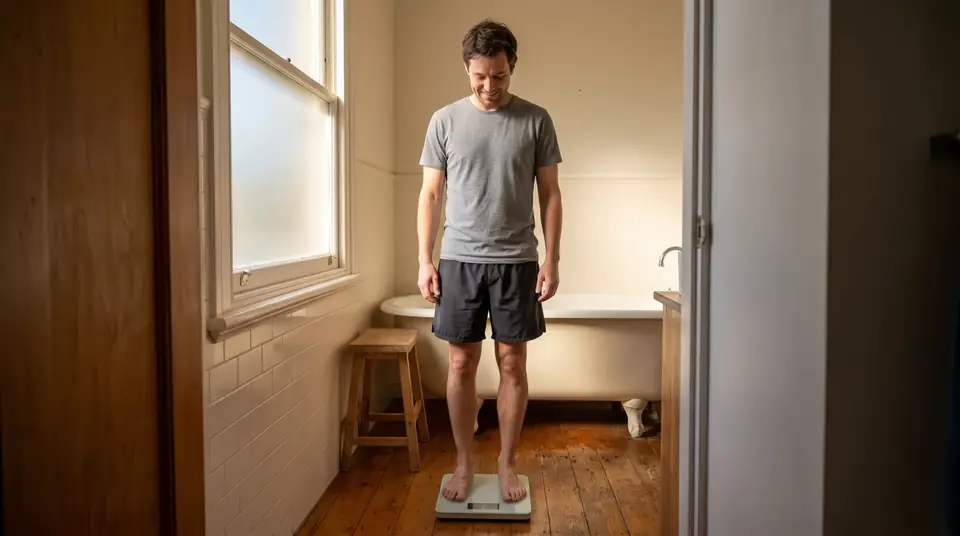
Ozempic Works, But Behavior Change Lasts: Achieving Real, Healthy Weight Loss
Most of what gets labeled a “weight loss problem” is actually a behavior problem wearing a nutrition costume. I spent years assuming that if a client understood what to do, they would do it. That knowledge was the missing piece, or so I thought. Clinical experience corrected that fast. The gap between knowing and doing is where almost every weight loss effort breaks down, and no medication closes that gap on its own.

Blog
For the “Bad Sleeper”: Understanding the Importance of Sleep and How to Condition Your Body for Rest
Most clinicians treat sleep as a compliance problem. Tell clients to sleep more, give them the hygiene checklist, move on. What experience has actually shown me is that the barrier is almost never information. People know sleep matters. The harder clinical truth is that poor sleep is often downstream of something else: pain, anxiety, a nervous system that never fully downregulates. Treating sleep in isolation, without addressing what’s driving the disruption, is why most sleep advice doesn’t stick.

Blog
It Sounds Dramatic to Talk About Sacrifice, But Learning How to Change Bad Habits Is Essential
Clinically, I lean toward the replacement framework. The research backs it up. But I’d be lying if I said I haven’t watched that approach become a sophisticated form of avoidance. Some clients are so skilled at designing a replacement behavior that they never actually stop the old one; the substitution just runs alongside it. What I’ve learned is that replacement is the strategy, but at some point elimination is the decision. No amount of gradual tapering gets you there if the client isn’t ready to make it.

Blog
Why “Doctor’s Orders” Only Last so Long: How to Find Motivation to Exercise That Actually Lasts
Most of my training told me motivation was the problem to solve before behavior change could happen. Get the client motivated first, then the exercise follows. What I actually see is the reverse: motivation tends to emerge from doing, not precede it. The field keeps trying to pre-load people with enough reasons to act when the more honest clinical truth is that meaning gets built through movement, not before it.

Blog
Stop Chasing the Flashy 5%: Mastering the 95% Routine Is the True Importance of a Healthy Lifestyle
When it comes to changes to improve your health, whether it is anything from a new exercise program to a supplement, the foundation and structure it creates for the long term is most important. Short term gains and periods of significant progress are great. What happens after that period is key. Does the person relapse and go back to similar behaviors they carried previously? Or do they continue to build on that foundation going forward?

Blog
Flashing the 80/20 Rule Diet: Giving Yourself Permission to Eat and Learning How to Stay Healthy Long Term
The standard advice on how to stay healthy is not wrong. Move more. Eat well. Sleep enough. Manage stress. Every major health organization, the CDC, Harvard, UCSF, says roughly the same thing. The problem isn’t the checklist. It’s that the checklist alone doesn’t keep people going.

Blog
How Do You Prove Something Didn’t Happen? Why Strength Training Shows the True Importance of Exercise
To get stronger, it takes consistency over time. Just one workout, or one week of increased activity won’t make a difference long term. Strength training is often grouped in with medications, when honestly it should be thought of in the same narrative of brushing your teeth or even drinking water.

Blog
My Take on Nutrition: Shifting Focus to the Essentials of How to Eat Healthy
The loudest voices in nutrition right now are selling differentiation. Carnivore versus keto versus Mediterranean versus whatever gets traction this quarter. In fifteen years of working with clients across acute and post-acute settings, I have never once seen the final five percent matter before the foundation was built. What I have seen is that the basics are boring to talk about, which is exactly why they get skipped, and why most people show up still stuck on them.

Blog
How Can Decision-Making Skills Improve Your Health? Why People Don’t Change
By Luke Alley, PT, DPT | Doctor of Physical Therapy & Health and Well-Being Coach

Blog
Gut Health and Mental Health: How to Improve Gut Health for Mental Health
By Luke Alley, PT, DPT | Health & Well-Being Coach

Blog
What Does a Health Coach Actually Do? A No-Fluff Guide to Real Transformation
Understanding what health coach do in practice, versus what most people assume, is the first step to using this resource effectively. Stuck between knowing what you should do for your health and actually doing it consistently? You’re not alone. That gap between information and implementation is exactly where health coaches thrive.

Blog
How to Improve Gut Health: A Physical Therapist’s Guide to Better Digestion
Understanding how to improve gut health starts with one insight most people miss entirely: your daily movement patterns matter as much as your diet. I learned the importance of the gut, and how it impacts your entire body, through personal experience. I struggled with persistent cramping and brain fog for years after long car rides. It took me awhile to learn that it was due to the prolonged inactivity and the food I would sometimes eat in the car rides. Once I started taking rest breaks to move around and packing snacks that were more consistent with my regular diet, I found immediate relief.
Nothing matches that search.
You're One Free Call Away From Moving Forward
Tell us where you are and what keeps getting in the way. You leave with a clear first step.